HR Analytics Explained
The following is the second part of our guide to HR Analytics. A short explainer video accompanies the text.
Part 2: Team Performance Diagnosis
Taking the aggregate team performance, and making assumptions or decisions based solely on that, can be a pitfall of team management. By analysing the within team performance too, a more insightful understanding can be developed.
For example, lets assume your organisation has four teams of twenty employees. Each employee’s performance is tracked to a KPI – in this example, the KPI is Sales Conversion Rate (expressed as a percentage).
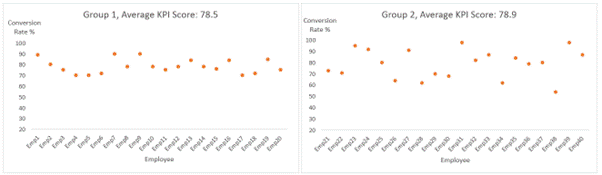
Let’s compare the two top performing teams, both with a similarly high aggregate score:
The team on the left are a consistent group: there is little variation or dispersion between the different scores.
The team on the right, however, are a more erratic group: some high performers, but also some employees with quite low scores.
A mistake management can make is assuming that a team that’s performing well in terms of overall KPIs is “safe”, when in actual fact there could be signs that it’s a team that’s at risk.
Why is the second team performing erratically? Putting the team under the lens of People | Process | Technology, and working through where the bottlenecks or pain points are, should help to improve the consistency of the team.
What about teams underperforming in terms of overall KPIs?
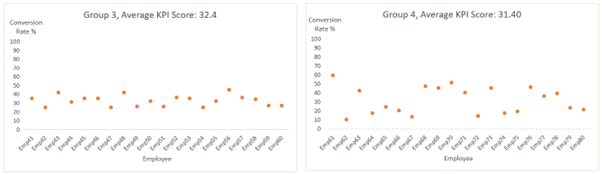
Here we compare two teams performing relatively poorly:
Both teams are underperforming Group 1 and Group 2. However, similar to Group 1, Group 3 (on the left) is a more consistent and cohesive team. It could be that they’re well coached, it’s just that a particular Process or Technology block is preventing them from improving further.
Group 4 is performing erratically, similar to Group 2, and likely needs a full review of how management can support the team better.
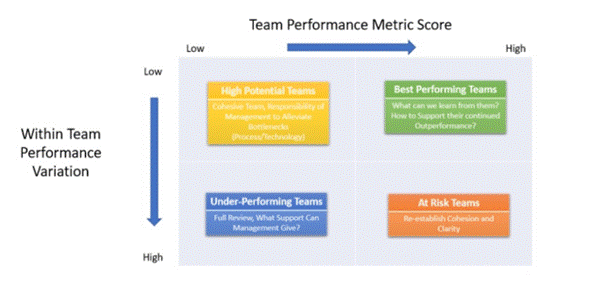
By grouping teams based on not just their relative performance, but also their within team performance, its possible to better assess and make informed decisions to make improvements to output:
Part Three of this series will be published shortly.